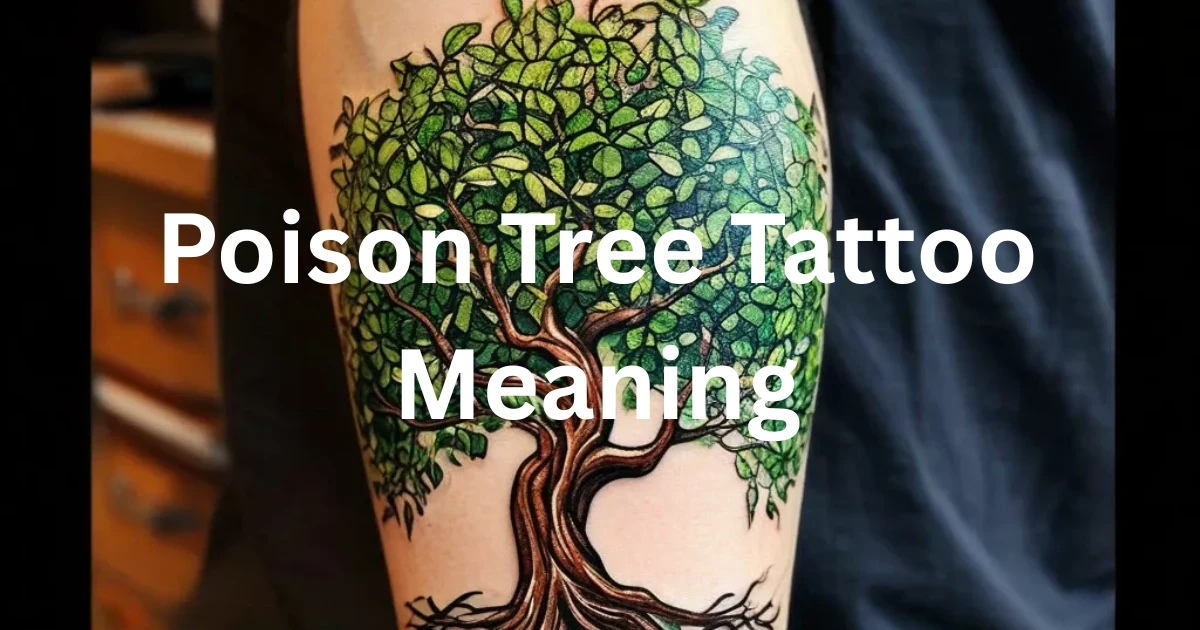
Poison Tree Tattoo Meaning? A poison tree tattoo isn’t just dark ink — it’s a confession. Rooted in William Blake’s haunting 1794 poem, this design marks the anger we swallow instead of speak. Here’s what it really means, and why so many people are choosing to wear it.
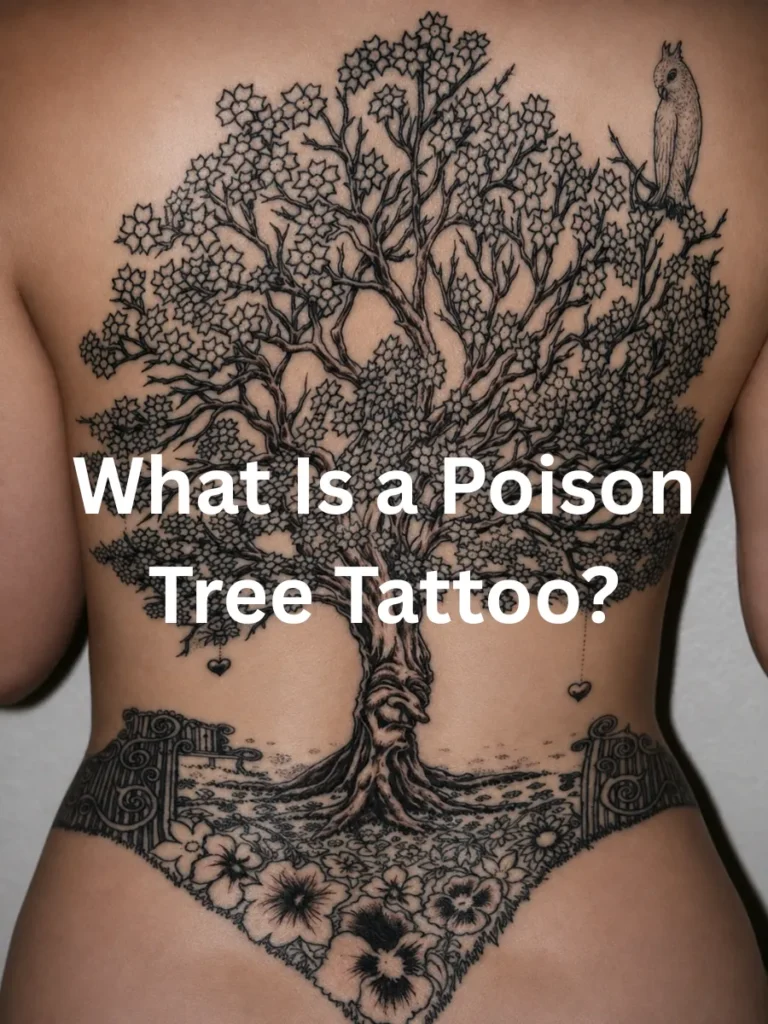
What Is a Poison Tree Tattoo?

A poison tree tattoo is body art built around a twisted, gothic-style tree, often paired with a single glowing apple, bare branches, or cracked bark. It looks unsettling on purpose.
Unlike a tree of life tattoo, which feels balanced and hopeful, this design leans into decay. That visual imbalance mirrors the emotional imbalance at the heart of its symbolism.
Related Post: Spiritual Meaning Of Bubble: Signs, Symbols & Hidden Messages
The Spiritual Meaning of the Poison Tree
Beyond the poem, the poison tree symbol carries a spiritual weight. It speaks to how unspoken pain shapes a person from the inside out.
Many wearers see it as a mirror, not a warning aimed outward. It reflects their own struggle with silence rather than someone else’s wrongdoing.
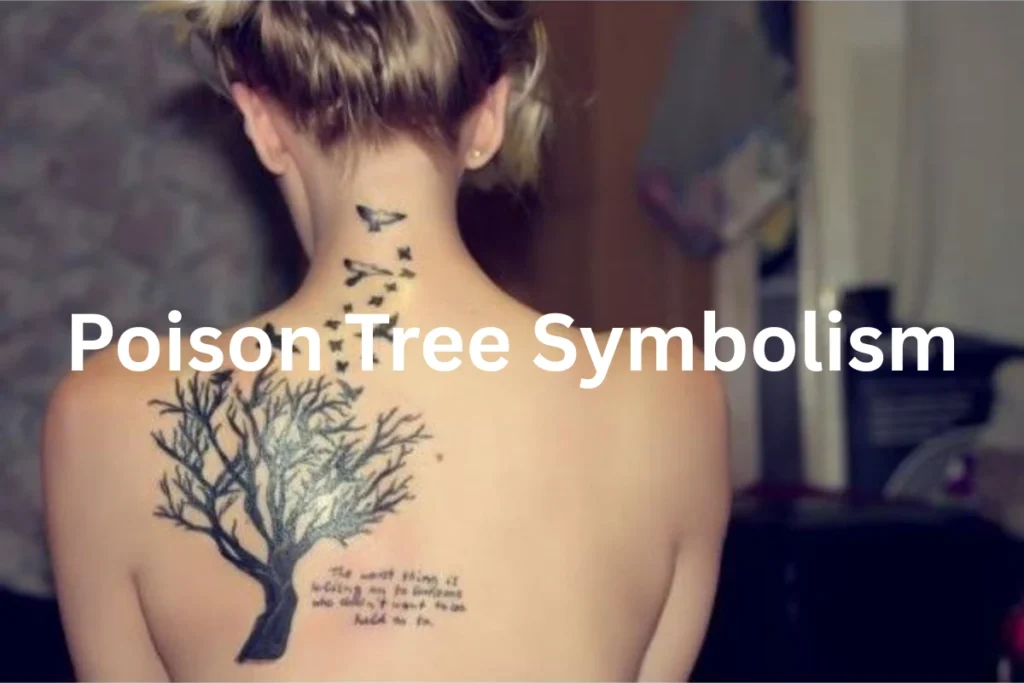
Poison Tree Symbolism: Core Meanings Explained

This tattoo carries several layered meanings. Most people connect with more than one at the same time.
Suppressed Anger and Buried Resentment
This is the most direct reading, pulled straight from Blake’s verse. It marks anger that never got spoken out loud.
For some, it’s tied to one specific grudge. For others, it’s a broader pattern they’re finally naming.
Betrayal and Emotional Damage
The poison tree tattoo meaning often connects to a specific betrayal. Someone broke trust, and silence followed instead of confrontation.
The poisoned fruit becomes a stand-in for that damage. It looks appealing but hides real harm underneath.
Growth, Healing, and Transformation
Not every version stays dark. Many wearers flip the story, using the tree to mark the moment they chose healing over resentment.
A half-dead, half-living tree design captures this shift well. One side shows the wound; the other shows recovery.
Inner Strength and Resilience
For some, the tree isn’t about the anger itself. It’s about what they survived to get past it.
Getting through a toxic period takes quiet endurance. This tattoo becomes proof of that endurance.
Karma and Consequence
Outside of Blake’s poem, the tree also works as a karma symbol. What you nurture, good or bad, eventually produces fruit.
This reading doesn’t need any religious framework. It’s simple cause and effect.
A Warning Against Toxic Relationships
Many people get this tattoo after leaving a toxic relationship. It marks the lesson learned, not just the pain endured.
It can also function as a personal reminder: speak up before resentment takes root.
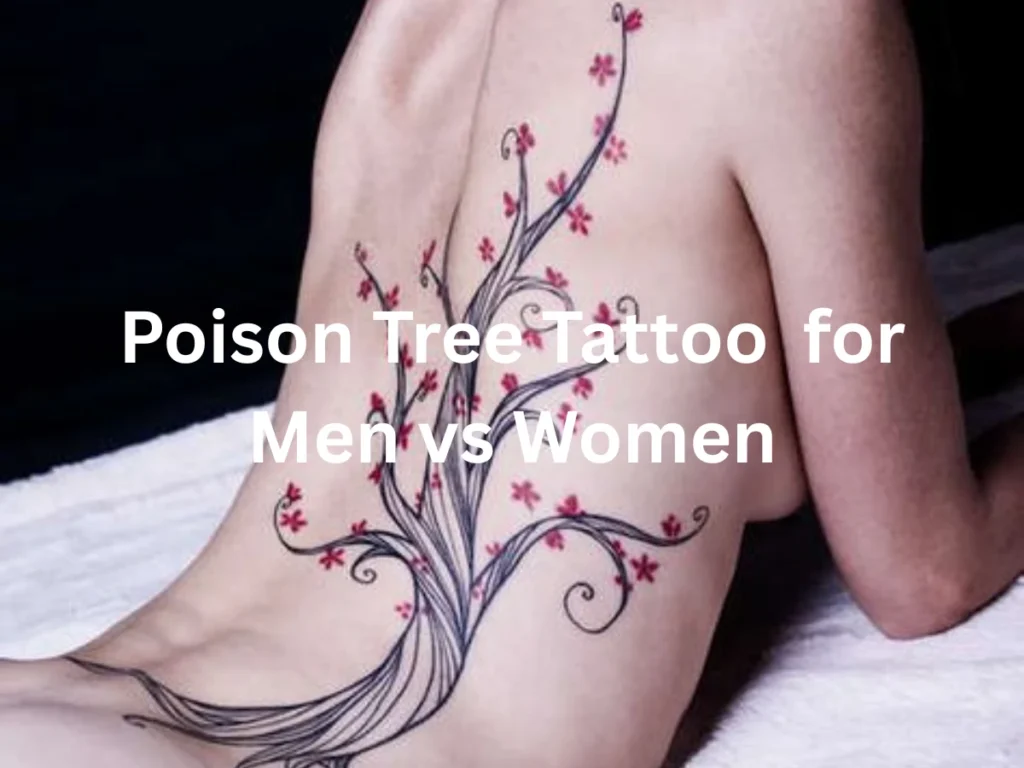
Poison Tree Tattoo Meaning for Men vs Women

Women who choose this design often connect it to reclaiming their voice after staying silent too long. It marks resilience after emotional pain.
Men more often tie it to emotional control, framing it as a reminder not to let anger build up unspoken. Neither meaning is fixed to gender.
Popular Poison Tree Tattoo Designs
- Black and grey gothic style — heavy shading, twisted limbs
- Blake-inspired illustration — etched, skeletal branches
- Half-dead, half-living tree — pain on one side, growth on the other
- Serpent and fruit motif — leans into the Eden connection
- Minimalist line art — subtle, easy to place almost anywhere
- Watercolor style — soft color bleeds instead of hard linework
Related Post: Butterflies Spiritual Meaning: What It Really Means
Color Meanings in Poison Tree Tattoos
- Black — darkness, secrecy, suppressed emotion
- Red — anger, danger, unresolved rage
- Green — toxicity mixed with hope or growth
- Purple — spiritual conflict and inner struggle
- Gold — echoes Blake’s “apple bright,” drawing focus to consequence
Best Placement Ideas for a Poison Tree Tattoo
- Forearm — visible, worn as a daily reminder
- Ribcage or back — private, kept for the wearer alone
- Shoulder or upper arm — space for detailed, larger designs
- Wrist or behind the ear — small, minimalist symbolism
Conclusion
A poison tree tattoo carries far more depth than its dark visuals suggest. Rooted in Blake’s 1794 poem, it speaks to something almost everyone has felt: the weight of anger left unsai.
Whether it marks suppressed pain, hard-earned healing, or literary appreciation, this design rewards anyone willing to look past the shadows for its meaning.
FAQ’s
What does the poison tree symbolize?
It symbolizes suppressed anger and resentment that grows more dangerous the longer it stays hidden.
What is the meaning behind the poison tree?
The meaning centers on William Blake’s 1794 poem, where unspoken anger toward an enemy grows into something destructive.
What is the meaning of the poison tree?
At its core, it represents what happens when hidden emotions are nurtured through silence instead of released through honesty.

Aaron Collins is a content writer passionate about researching meanings, symbols, dreams, colors, and tattoos, creating simple, accurate, and easy-to-understand guides for readers worldwide.